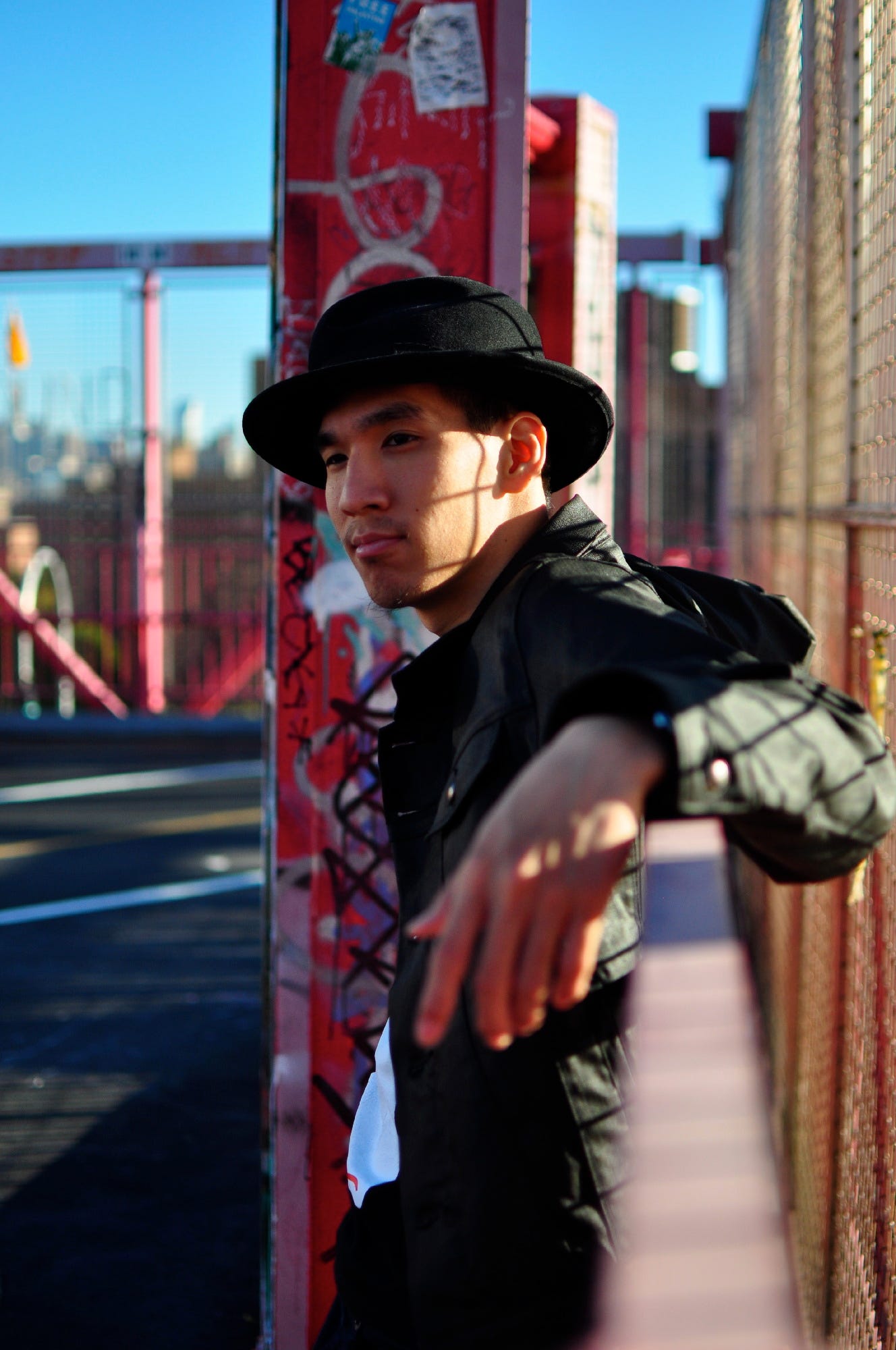
“I felt compelled to play and replicate each of these instruments — Eastern, Western, Hawaiian — with only my voice.”
Jason Tom is an American beatboxer and slam poet who has represented Hawaii at the sixth International Human Beatbox Convention and the first and fifth American Beatbox Championship in Brooklyn. He received the Hawaii Scene Choice Award for Best Solo Human Beatbox Performer, TEDx Presenter Award for his “Vocal Groove” presentation, among other accolades. He co-founded the Human Beatbox Academy, where he leads outreach performances, speaking engagements, and workshops for students of all ages.
In his interview with The International Wave, Jason talks about his childhood inspirations, references exhilarating onomatopoeic beatbox sounds, and kowtows to his Asian cultural heritage as a fourth-generation American of Hawaii Chinese descent. The chat also delves into his most challenging elements of his personal life, including an SUV collision which rendered him unconscious, and on what strung him together to revitalize his strength as an inspirational speaker.
***
This interview has been edited and condensed for clarity.
Woojin Lim: Tell me about your journey towards becoming a professional beatboxer. When were you first exposed to the artform, and how did you decide to take this on as part of a longer professional career?
Jason Tom: I began beatboxing at the tender age of four, recording on music cassettes by six, and performing live at 21. How I first got exposed to beatboxing was through music played on vinyl records, music cassettes, radio, television, as well as the beatboxing I heard from the 1980s to early 2000s. I am an analog and pre-YouTube era beatboxer.
In the 1980s, I often heard Bobby McFerrin, the Fat Boys, Doug E. Fresh, Biz Markie, and Michael Jackson on the radio at my entrepreneurial father’s Chinese restaurant in Honolulu and during our family road trips on the West Coast of the United States. I also tuned in whenever the Police Academy film was televised to catch Michael Winslow’s every scene as Larvell Jones who performed amazing sound effects with his voice and beatboxing. In the 1990s, I was greatly inspired by Michael Jackson’s televised beatboxing of “Who is It” during his interview with Oprah and Rahzel’s MTV Hip Hop Week human beatbox commercial spots. In the early 2000s, Filipino American beatboxer Leejay Abucayan’s Stir TV Austrian Beatbox Battle feature and Chinese American beatboxer Elaine Chao’s show-stopping performance on Showtime at the Apollo blew me away.
All of what I’ve mentioned more than convinced me to pursue my career as a Human Beatbox music artist. For 34 years I’ve been beatboxing altogether.
Let’s talk more about beatboxing as an artform and its distinctive platform. What drew you to beatboxing as a work of art?
Beatboxing and the art of vocal percussion was coined “human beatbox” as the fifth cornerstone of hip hop culture by DJ Barry B for Doug E. Fresh in 1982. The earliest styles of the human beatbox — The Fat Boys with “Human Beat Box” in 1983, Doug E. Fresh with “The Original Human Beat Box” in 1984, and Biz Markie with “Make the Music With Your Mouth” in 1987 — emulated drum machines. In essence, human beatboxers were “human drum machines.”
What drew me to beatboxing is my passion for music and love for creative expression. I felt compelled to sing the kick drum, snares, hi-hats, the boots and the cats, bass, synthesizer, drum machines, turntables, and didgeridoo. I’ve also been fascinated with the human voice being used as an instrument like doo wop, scat singing, acapella, and human beatbox. When I beatbox, I embody and express the characteristics of various musical instruments.
What’s the essence of “good” beatboxing?
The essence of good beatboxing is foundation and the music. Originality, technique, creativity, breath control, stage presence, and presentation — that’s what I carry with me in my era of beatboxing and have passed onto Hawaii beatboxers of the Human Beatbox Academy. That gives me added fuel in my tank to level up and evolve. “Add oil” as we say in Chinese.
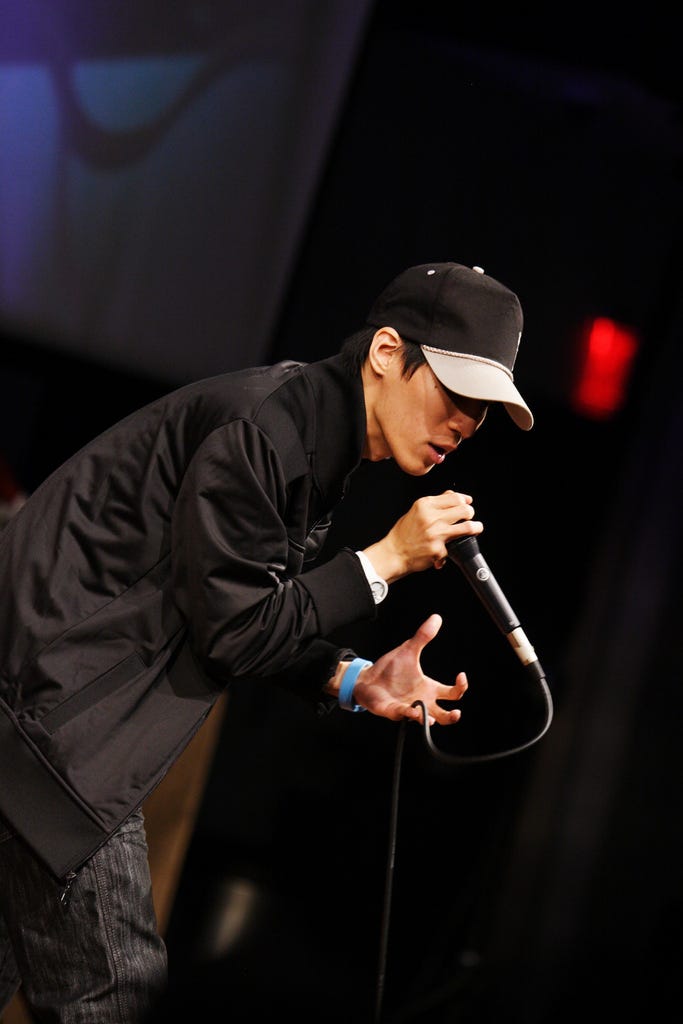
You’ve often been described as “Hawaii’s Human Beatbox” by the press — but beyond that, how would you describe yourself as an artist? Are there any particular rhythms, beats, or sound replications that you consider your specialty?
As a beatbox artist and entertainer, I have an affinity for song and dance because of Fred Astaire, Gene Kelly, and Michael Jackson’s body of work. My staples include my boom bap, house, reggaeton, dubstep, inward K snare, heartbeat bass, Motown synth, lovebird bass, Genghis Blues vocal didgeridoo, high laser synthesizer, tom-toms, classic snare, and wood block.
My voice teacher Lina Doo once showed me the Mongolian documentary film “Genghis Blues,” from which I was inspired to fuse Tuvan throat singing and my beatboxing to create my own vocal didgeridoo technique.
Since you performed regularly for Chinese New Year festivals in Honolulu’s Chinatown and studied abroad in China during your college years, how has your Asian heritage inspired your worldview as an artist?
Growing up as a fourth-generation American of Hawaii Chinese descent, I recognize that it’s important to connect with my ancestral lineage and roots: to not forget where I came from to know where I will be going. Hawaii is diverse, so being well traveled and multilingual is a plus. In addition to speaking a number of Chinese dialects, I’ve occasionally picked up a bit of Hawaiian, Japanese, Korean, Vietnamese, Samoan, and Filipino terms as well. I do enjoy interacting with Chinese speaking audiences because I get to change things up.
The variety of Eastern, Western, and Hawaiian musical instruments I’ve tried to play includes my home toy set of Lion dance drums with a pair of drumsticks and cymbals, a vintage Jaymar wooden toy piano, ukulele, ipu, tuba, pahu, and the traditional erhu. I felt compelled to play and replicate each of these instruments with only my voice. My first memory of hearing an erhu was watching Jet Li in the “Once Upon A Time in China” franchise.
Where have you found your place in Hawaii’s beatboxing and hip-hop community?
At the time I began beatboxing and made my live performance debut, there was no Hawaii-specific beatboxing community. Yes, we had our share of Hawaii human beatbox pioneers — Radical Rob, Gizmo, Re-Run, and Joevon Brown — as well as active Hawaii beatboxers and Hawaii live loopers, but not a coherent beatboxing community.
At one point, Hawaii’s schools, after-school programs, and studios contacted me to facilitate human beatbox workshops, and that’s how I started Human Beatbox Academy. Through school tours, one-on-one lessons, community events, showcases, competitions, and workshops, we recruited beatboxers throughout the state of Hawaii and raised local beatbox champions.
For the longest time, my complex trauma came with nightmares, night terrors, and flashbacks. I’ve also been afflicted by severe asthma attacks since my childhood. I learned some years back that a very young beatboxer died of a severe asthma attack. Never met the young man, but I reached out to his family and paid tribute to him via my blog. Then years after, one of my female church friends died of a severe asthma attack. She left behind her husband and kids. She was one of the sweetest, kindest and most encouraging sisters in Christ I knew. I was greatly saddened by the unexpected news. So, I don’t take asthma attacks lightly.
That said, prayer, my faith in God, being connected with my church family, meditating on biblical verses, placing priority in my health over business, exercise, and writing has helped me tremendously in my overall physical and spiritual health, well-being, and wellness.
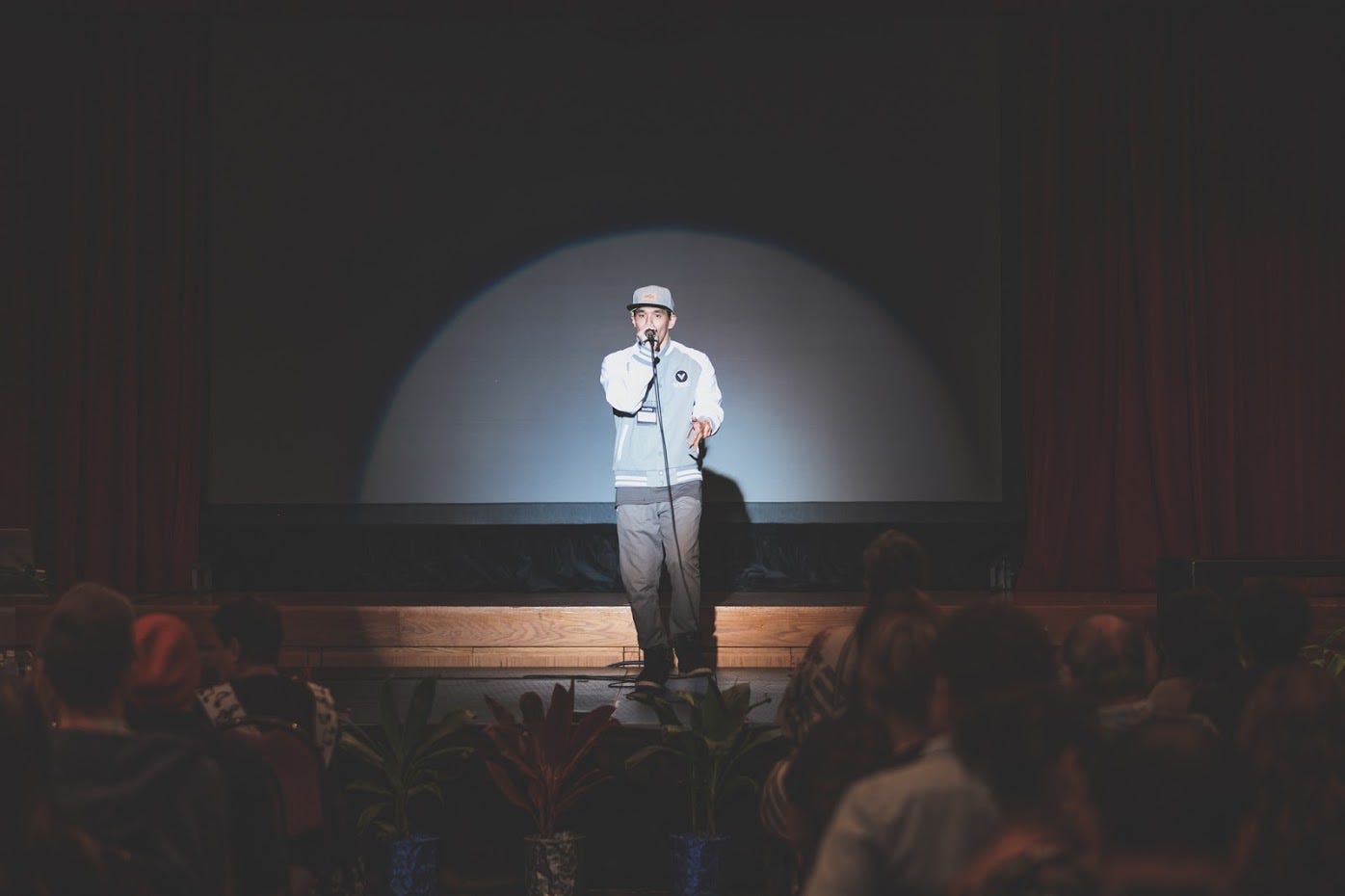
I deal with my stage fright with work ethic and discipline by practicing a ton. I will on occasion still get or feel “nervous” before hitting the stage, so I work at this regularly. As for overcoming stuttering on stage, what helped me is to write out a general outline of my presentations and to work on my timing before I do any keynote engagements. It took me a while to find my speaker’s voice, but I worked hard on public speaking with personal conviction.
What were some personal highs and lows of your career so far?
I’ve had many memorable and fun moments in conversation with and performing alongside my fellow beatboxers and hip-hop artists. That said, in music business and entertainment, what also comes in the territory are crabs in the bucket that incite division and rifts within a community.
I am grateful to my family, friends, loyal fans and supporters who will at times be my eyes and ears to inform me when there may be folks — a random rapper, deejay, beatboxer, comedian, or a keyboard warrior — who incite attacks and belittle a beatboxer for no reason. That gives me mileage in a very unkind way, and they often do this for clout. There have also been other beatboxers who have carbon copied my sounds and taken bites out of my routines. Some have even claimed that they came up with it, even when they had not.
Best thing is not to lose sleep on it, forgive, move forward, and pray for even those who persecute us. Inappropriate behavior should not be tolerated in the beatboxing community or any community. Offline and online. Real people recognize real people. Real talk.
So, what’s on the horizon? Where do you see yourself next?
Lately I’ve received an entertainment work proposal to be the lead human beatbox artist for a production overseas and the West Coast. Though Covid-19 travel restrictions have prevented us from moving forward, I plan to revisit the proposal.
This season, I will collaborate with Prisma Dance for the Creation Production. Creation features dance, ballet, contemporary, hip hop dance, acrobatics, aerial art, music, poetry, and beatboxing. I also plan to start a video series of my human beatbox music, math, and movement lessons.
In the meantime, I am composing my own funky music that’s guaranteed to make you dance along. I’ve also worked, on my end, to level up with fresh original human beatbox sounds and techniques. On top of that, I’m hoping to expand my field of work on music videos, voice overs, movie films scores, Foley work, song and dance production. Stay tuned to JasonTom.com and join my email newsletter for breaking news, latest updates and my exclusive blog series.
Last but not least, any wise words of advice for aspiring artists?
Your talent will open the door but only your character can keep you there.
Press enter or click to view image in full size